Solo Dev Log · Part 5 of building and shipping Call the Cat in 178 days · Read the whole build log →
A game without music isn’t finished.
But filling it with someone else’s music
turned out to be its own nightmare.
Tracks labeled free online
each carry different terms.
Commercial use requires an application on one site.
Attribution on another.
Platform restrictions somewhere else.
My game was launching on mobile and Steam at the same time,
which multiplied the combinations.
At some point I did the math
and stopped reading license pages.
I pay for Suno now,
and the game’s music gets generated there.
Let me be exact about what I do and don’t do
I am not a composer.
I did not write these tracks by hand.
What I actually do is describe what a scene needs,
pass in some lyrics when a track needs them,
generate, listen, and throw most of it away.
The work is in the prompting and the picking,
not in the writing.
I want to be clear about that,
because “I make my own game music”
would be a nicer sentence than the true one.
Why verifying free music was harder than it sounds
Every site has different conditions
hiding behind the word free.
Attribution rules and platform-specific restrictions
quietly break multi-store releases.
And if a problem surfaces after launch,
the entire game is exposed —
not just the one track.
That asymmetry is what decided it.
The upside of using free music is saving a few hours.
The downside is a takedown on three stores at once.
A paid Suno plan replaced dozens of license pages
with one set of terms I read once.
The price of doing it this way
The good side is that I stopped auditing anything.
I can regenerate a track whenever the game’s mood changes,
and I never re-check terms before a build.
The bad side is real.
The ceiling isn’t my composing skill —
it’s how well I can describe what I want,
and how honestly I judge what comes back.
Most generations are not good enough.
The time moved from reading contracts
to listening and rejecting.
I’m not going to pretend that trade was free.
It cost weeks either way.
Then it spread past the game
Once music stopped being a bottleneck,
the videos changed too.
I generated a separate set of tracks for my shorts —
not the game’s BGM, different music for a different purpose.
Twenty-seven of those are up on YouTube now.
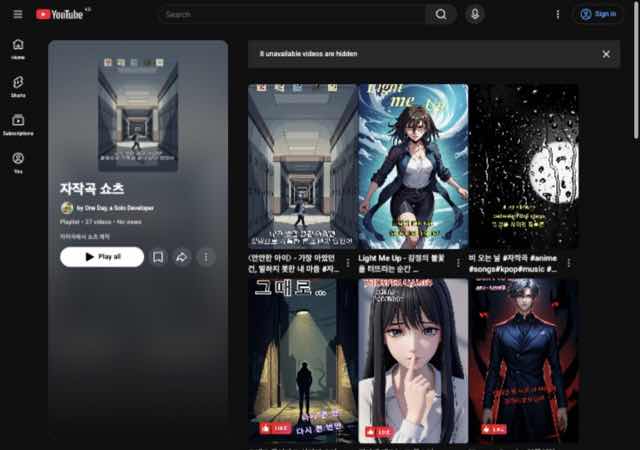
The YouTube playlist — 27 tracks made for my shorts. These are separate from the game’s in-game BGM, which isn’t published anywhere.
So every video on the channel runs on music from the same place,
and I never think about copyright when I edit.
My shorts pipeline rule is own catalogue only,
and it only works because generating another track is cheap.
That wasn’t the plan.
It was a side effect of solving a licensing problem.
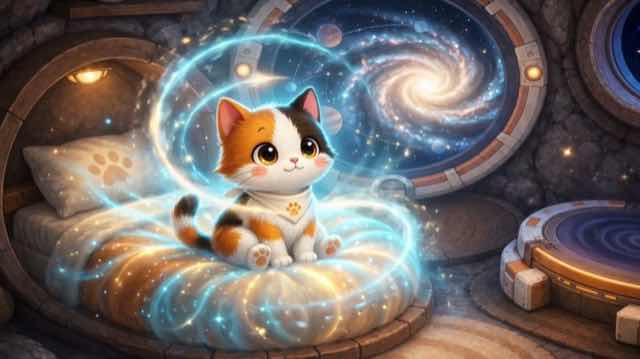
Generated BGM running under the Dream mode screen.
If you’re starting out
Don’t decide this on the music.
Decide it on how many places you’re shipping to.
One store, one country, and free tracks are probably fine.
Three stores at once, and every track
has to clear every platform’s terms independently.
That’s where the time explodes —
not in finding music, but in proving you’re allowed to use it.
Count your stores first.
And if you go the generated route,
check the plan you’re on before you ship anything.
Free tiers and paid tiers do not grant the same rights,
and that difference is the whole point.
Next time
For the sequel I’m listing what each scene needs
before generating anything.
Working mood-first meant
some moods ended up overlapping,
and I couldn’t tell until they were all in the game.
This time the scene-by-scene needs get counted first.
Solo dev of Call the Cat, shipped after 178 days
on Google Play
and Steam.
Now building the sequel, Call the Cat: Galaxy, in public.